
The conference “Tourism and Sustainability”, which took place in the packed amphitheatre of the Acropolis Museum on Tuesday 27 February, was a resounding success. Organised by the Hellenic Society for the Environment and Culture (ELLET) under the auspices of the Greek National Tourism Organisation (GNTO), the event was attended by the Minister of Tourism, the Mayor of Athens and the Secretary-General for Tourism Policy and Development, as well as distinguished speakers from Greece and abroad, representatives of institutional bodies and civil society.
ELLET President Stathis Potamitis welcomed the speakers and participants, setting the scene for the discussion by stating, “We aim to contribute to a better understanding of the phenomenon of overtourism and to examine tried-and-tested or proposed solutions, thereby enriching the national dialogue on the subject by placing particular emphasis on the carrying capacity of tourist areas and the views and experiences of local communities.”
In her opening speech, Tourism Minister Olga Kefalogianni noted: “The Ministry of Tourism is shaping a tourism product that will develop in a measured and balanced way, ensuring that economic development provides opportunities for all, protects the natural environment and cultural heritage, and showcases new destinations. We must move beyond the outdated model that prioritises quantity over quality and focus on the long-term development and resilience of destinations, whilst establishing rules for environmental protection.”
In his welcoming address, the Mayor of Athens, Haris Doukas, emphasised: “Tourism is developing at a pace many times faster than the creation of the necessary regulatory framework, the development of the required infrastructure, and the implementation of all the measures needed to ensure the optimal use of environmental resources, to safeguard the economic activity of businesses whilst providing stable employment for all workers, and to ensure that visitors have a satisfying experience.” He mentioned that the Municipality of Athens is conducting a study through ELLET on tourist capacity, which is expected to provide valuable insights into tourist flows and short-term rental accommodation. He requested: “The Ministry should empower us to regulate these platforms, so that, based on scientific data, we can better redistribute tourist flows across neighbourhoods.”
The conference covered three comprehensive sections:
The concept of a destination’s carrying capacity as a fundamental prerequisite for sustainable tourism development.
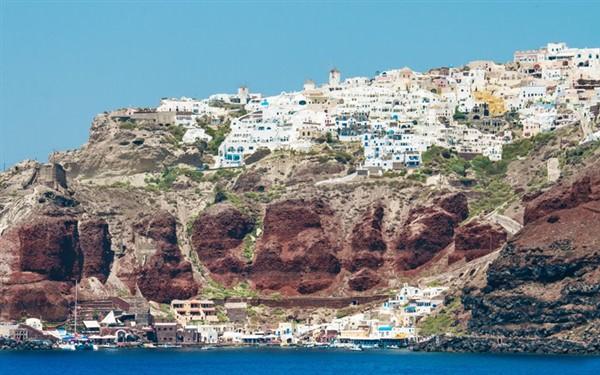
Experiences from tourism development in Greece and Europe: Lisbon, Kraków, Venice, Corfu, Santorini.
Proposals for managing tourism development in Greece.
It is clear that the Greek tourism sector has been meeting the key growth indicators (in terms of arrivals, revenue and tourist beds) for at least the past decade. The question that arises concerns the long-term outlook for this growth, as well as whether the sustainable approach is a “one-way street”.”
Carrying capacity is a necessary condition for investment, which is often subsidised by the State under the provisions of existing development legislation. It is absolutely essential to analyse the parameters of the carrying capacity of existing settlements with a view to integrating new residential developments within their current boundaries, as well as to carry out a specific study to determine whether there is “still scope for the expansion of existing settlements”.”
A common assumption in most statements is that large-scale tourism investments – which are usually promoted as “strategic investments” – cause problems by creating hotel complexes with large-scale residential areas (property developments), without the local authority being informed and with very limited benefits for the local community.
The contributions of the mayors of Santorini, Corfu and Lisbon, who analysed the pressures faced by popular destinations due to high tourist numbers, were particularly significant. The impacts of the concentration of numerous short-term rental properties in the centres of historic towns and settlements were highlighted: traffic congestion, changes to neighbourhoods, housing shortages for permanent residents, and changes to their way of life.
The problems caused by the arrival of large cruise ships carrying large numbers of passengers were discussed; these a) require the expansion of port and road infrastructure, b) cause traffic congestion, c) lead to air pollution and an increase in waste, whilst bringing very little economic benefit to local businesses.
Finally – and in the shadow of the impending legislation on unauthorised construction – the issue of building without planning permission and without an assessment of the area’s carrying capacity could not be overlooked, leading to the widening of old paths to be classified as roads, the destruction of natural resources, and an increased energy burden on the area due to the compulsory expansion of infrastructure.
The main conclusion is that, in order to plan tourism development with a view to sustainability, political will and coordination amongst all the relevant ministries are required, so as to speed up the planning process and ensure that it is faithfully implemented.
The objectives of a sustainable approach to tourism must include the protection of the natural and cultural environment, a concept that encompasses contemporary culture and the quality of life in tourist destinations. The organisation and design of experiential activities for the modern, discerning tourist. Equality for residents of tourist destinations – with insularity being a significant factor – in terms of health, education and everyday life. Maximising the benefits of tourism for the local community and economy.
The conference was attended by: Sneška Quaedvlieg–Mihailović, Secretary General, Europa Nostra (via video link); Betty Chatzinikolaou, Legal Expert, Tourism Expert, former President of the Greek National Tourism Organisation (EOT), Chair of the Institutional Framework Council of ELLET; Ioannis Spilanis, Professor, Department of Environment, University of the Aegean, Director of the Laboratory of Local and Insular Development and the Observatory of Sustainable Tourism of the Aegean; Miltiadis Lazoglou, Ph.D., Urban Planner and Spatial Planner, Head of Environmental Policy, ELLET; Paris Tsartas, Associate Professor of Tourism Development, Harokopio University, ELLET Member; Nikolaos Zorzos, Mayor of Thira; Stefanos Poulimenos, Mayor of Central Corfu (via online connection); Carlos Moedas, Mayor of Lisbon (recorded speech); Robert Piaskowski, Deputy Mayor for Culture of Kraków (via online connection); Amalia Androulidaki, Directorate-General for Restoration, Museums and Technical Works, Ministry of Culture; George Stamtsis, President of EATA – Athens Development and Tourism Promotion Company; Marco Gasparinetti, Venice City Councillor, Lawyer, Network of Historic Cities of the Mediterranean (via online connection); Nikolaos Triantos, Electrical Engineer, former President of the Corfu Department of the Technical Chamber, Network of Historic Cities of the Mediterranean; Myron Flouris, General Secretary for Tourism Policy and Development, Ministry of Tourism; Efthymios Bakogiannis, General Secretary for Spatial Planning and Urban Environment, Ministry of Environment and Energy (recorded speech); George Vernikos, General Secretary, Association of Greek Tourism Enterprises; Agni Christidou, Director, Hellenic Chamber of Hotels; Eleni Maistrou, Associate Professor, School of Architecture, National Technical University of Athens (NTUA), Chair of the Council for Architectural Heritage ELLET.
The conference sessions were coordinated by: Michael Jacobides, Professor at London Business School and Strategic Advisor to ELLET; George Lialios, journalist at Kathimerini; Tasos Telloglou, journalist at Inside Story; and Yiannis Palaiologos, journalist at Kathimerini and Inside Story.
Retrieved from: ecopress.gr