
*by Stathis Kousounis
What provisions does the new Special Spatial Planning Framework for Tourism, which has been put out for consultation, make for special forms of tourism?
The new Special Spatial Planning Framework for Tourism makes specific reference to special forms of tourism; the Ministry of the Environment and Energy has opened it up for public electronic consultation until 15 September.
As mentioned above, special forms of tourism and the associated tourism infrastructure are characterised by dynamic demand; for this reason, it is considered necessary to record them and provide relevant guidelines in the Special Spatial Planning Framework for Tourism currently under consideration. It should be noted, however, that the recording of special forms of tourism is indicative and not exhaustive.
Furthermore, in many cases there are overlaps between different specialised forms of tourism, or between these and the predominant form of sun-and-sea tourism, which makes the boundaries between the various forms of tourism fluid and requires a corresponding degree of flexibility in the implementation of the proposed guidelines. The combined use of different forms and infrastructures of tourism is encouraged.
These guidelines focus on issues relating to spatial planning and not on sector-specific guidelines or relationships with other forms of planning. The following are the proposed guidelines of the Special Spatial Planning Framework for Tourism for the specific forms of tourism, based on their indicative classification.
RURAL TOURISM
Rural tourism is developed in rural areas of interest for tourism, including areas within the National System of Protected Areas, with the exception of areas designated for absolute nature conservation, as well as agricultural (rural) land of high productivity, as determined or to be determined in accordance with the institutional framework and procedures of the competent Ministry of Rural Development and Food. In nature conservation areas and national parks, forms of nature tourism specific to these areas are permitted (e.g. mountaineering, geotourism) with the necessary accompanying facilities (shelters of up to 200 sq.m.), agrotourism, etc. In regional natural parks, the development of rural tourism is encouraged, with the designation of eco-development areas and the extension of the relevant possibilities beyond residential units.
With regard to rural tourism, the following are also mentioned:
- Measures to promote protected areas with relevant resources (nature, landscape) as hubs for the development of nature tourism on a broader scale. Such areas are, in principle, protected areas that have a Management Unit.
- Establishment of local networks and routes – trails – of a multidisciplinary nature, with an emphasis on the nature-loving aspect.
- The marking of routes in accordance with the specifications in force in the EU, the publication of mountain tour maps, and the enhancement of the routes with alternative activities (mountain bike trails, horse riding). Where possible, these should include traditional settlements offering catering and recreational facilities.
- Preservation and promotion of aspects of the traditional way of life.
- Creation of infrastructure for observing and interpreting nature (e.g. observatories, visitor centres, museums and mountain refuges).
The new Special Spatial Planning, which specialises in the promotion of agritourism and wine tourism, proposes:
- Strengthening renovation measures for traditional or abandoned buildings and settlements, or groups of settlements, with the aim of preserving rural heritage.
- Linking local production with agro-tourism consumption (based on local quality, etc.).
- Strengthening gastronomic tourism through initiatives to promote Greek cuisine and its various regional variations as a key tourist resource.
- Promoting the marketing of high-quality agricultural products and high-quality locally processed products.
- Strengthening the focus of current European programmes for rural areas on integrated rural development.
GEOTOURISM
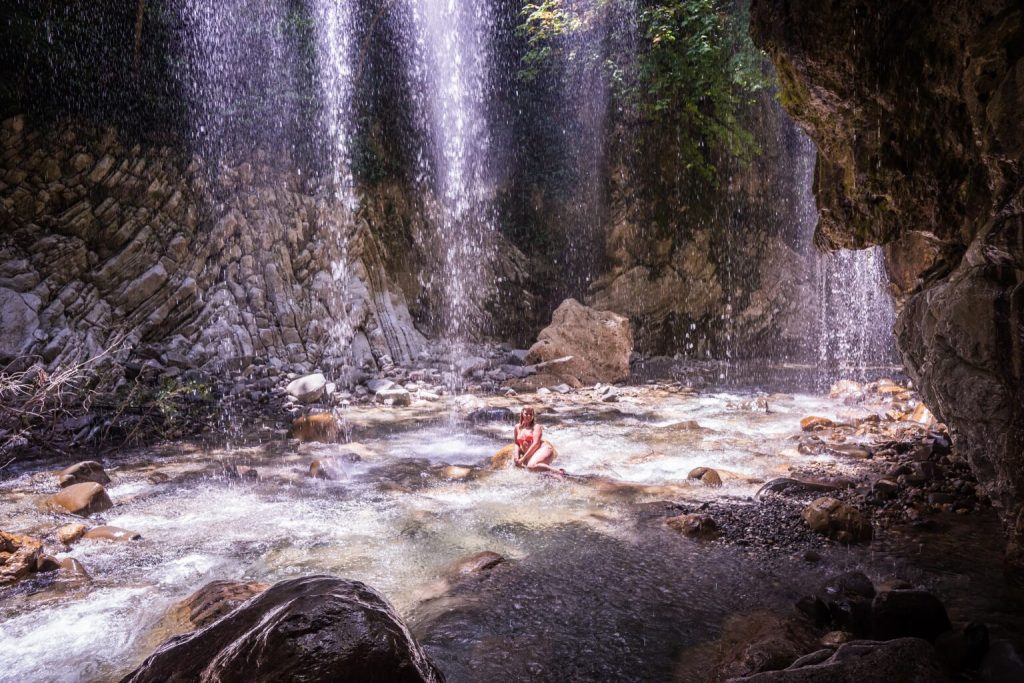
With regard to geotourism, the following is mentioned:
- Highlighting, promoting and organising visitor activities for the country’s geotopes (volcanoes, caves, canyons, fossil sites, major geological faults, ancient or disused mines and quarries, landforms and landscapes created by nature over the course of geological centuries) and initiatives to integrate them into tourist networks (whether thematic or not), depending on their specific (general or particular) characteristics.
- Ensuring that they remain accessible and managing visitor numbers whilst respecting the resilience of each ecosystem.
- Integrating them into tourist networks (whether thematic or not) depending on their particular (general or specific) characteristics.
FISHING TOURISM
Fishing tourism is permitted:
- in marine areas and inland surface waters – lakes, rivers and brackish ecosystems – where recreational fishing is explicitly permitted under the relevant institutional frameworks,
- based on the guidelines of Marine Spatial Planning Frameworks, once these have been institutionalised, and
- in leased areas of marine or terrestrial space, for aquaculture purposes, subject to the conditions laid down in the licensing framework for these units.
- The development of fishing tourism services in conjunction with aquaculture facilities is encouraged.
SPORTS, EVENTS AND TOURISM
With regard to sports tourism, the following are mentioned:
- Enable the possibility of additional uses (commercial, catering, leisure, administrative) in large sports facilities, through town planning legislation.
- The development of training centres in mountainous and semi-mountainous areas with adequate access and accommodation facilities, as well as in coastal and lakeside areas for sports activities related to the sea or lakes. Training centres and other related infrastructure should
OUTDOOR SPORTS, RECREATION AND TOURISM
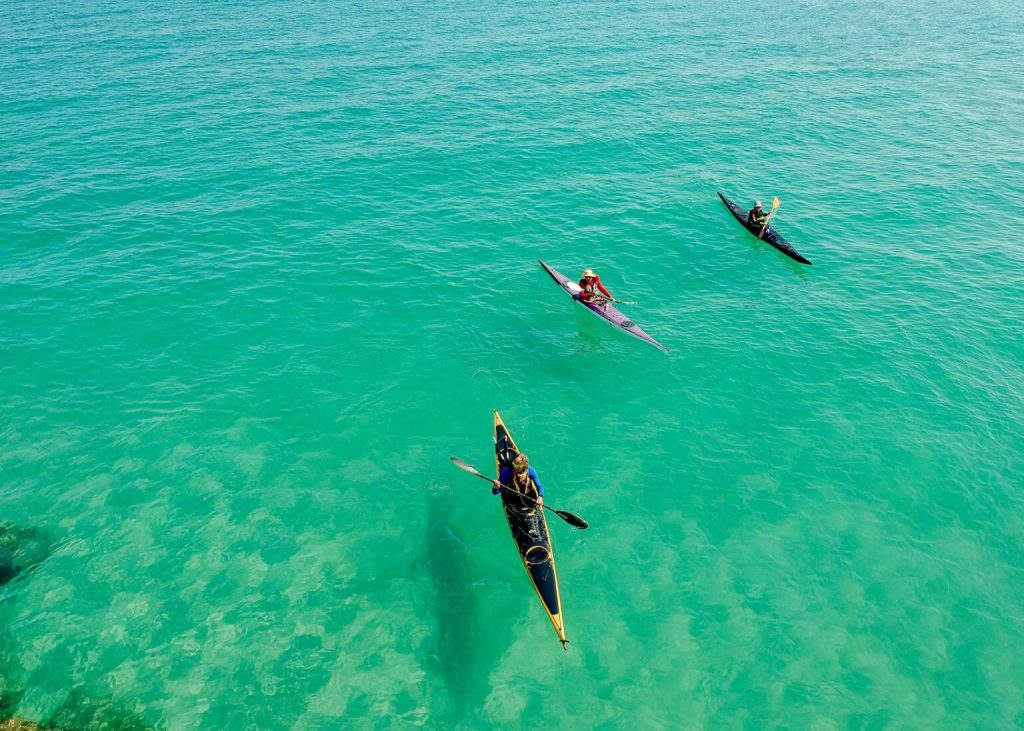
With regard to outdoor sports and recreation – adventure tourism, the following are mentioned:
- The creation of trails in the countryside, particularly in mountainous and semi-mountainous areas, and their connection to international trails, as well as the promotion of the development of networks.
- Development of sporting activities in mountainous areas (e.g. mountaineering, climbing, canoeing, rafting, hang-gliding, paragliding). Some of these activities can be developed to a lesser extent in semi-mountainous and lowland areas.
- Creation of climbing areas.
SKI TOURISM
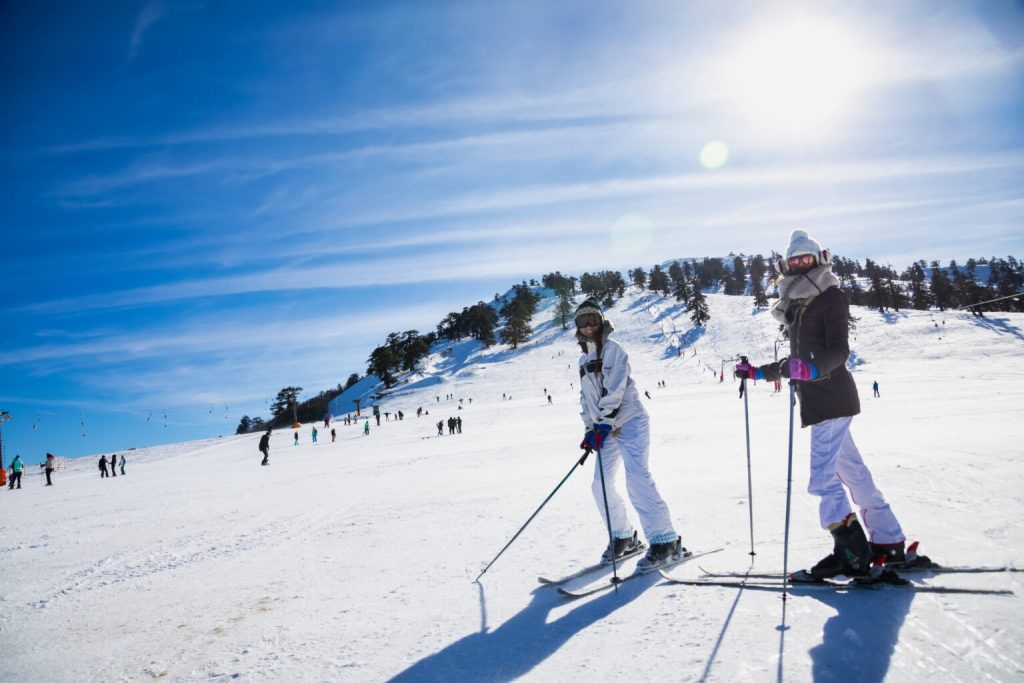
With regard to ski tourism, the following is mentioned:
- Improving accessibility to existing ski resorts: Chelmos (Kalavryta, Regional Unit of Achaea), Mainalos (Tripoli, Regional Unit of Arcadia), Tymfristos (Velouchi) (Karpenisi, Regional Unit of Evrytania), Pelion (Regional Unit of Magnesia), Pertouli (Regional Unit of Trikala), Vernos (Vitsi) (Regional Unit of Kastoria), Karakoli Metsovo (Epirus, Regional Unit of Ioannina), Profitis Ilias Metsovo (Epirus, Regional Unit of Ioannina), Anilios, Metsovo (Epirus, Regional Unit of Ioannina), Vasilitsa (Regional Units of Grevena and Ioannina), Vigla, Pisoderi (Regional Unit of Florina), Elatochori (Regional Unit of Pieria), Selio (Regional Unit of Imathia), 3–5 Pigadia, Naoussa (Regional Unit of Imathia), Kaimaktsalan (Vora) (Regional Unit of Pella), Lailia (Regional Unit of Serres), Falakro (Regional Unit of Drama), Gerontovrachos Parnassos (Regional Units of Boeotia/Phocis/Phthiotis), Pangaio (Regional Unit of Kavala), Agrafa, Municipality of Limni Plastira (Regional Unit of Karditsa), Chrysso Elafi (Regional Unit of Imathia), Anogia – Psiloritis (Regional Unit of Rethymno), Parnassos (Regional Units of Boeotia, Phocis and Phthiotis), Ziria (Regional Unit of Corinth).
- When planning new ski resorts, the expected impacts of climate change must be taken into account, as well as the potential for using innovative technologies to address them.
- Extending the operating season of ski resorts through special incentives for the development of mountain sports and other specialist sporting activities.
Golf
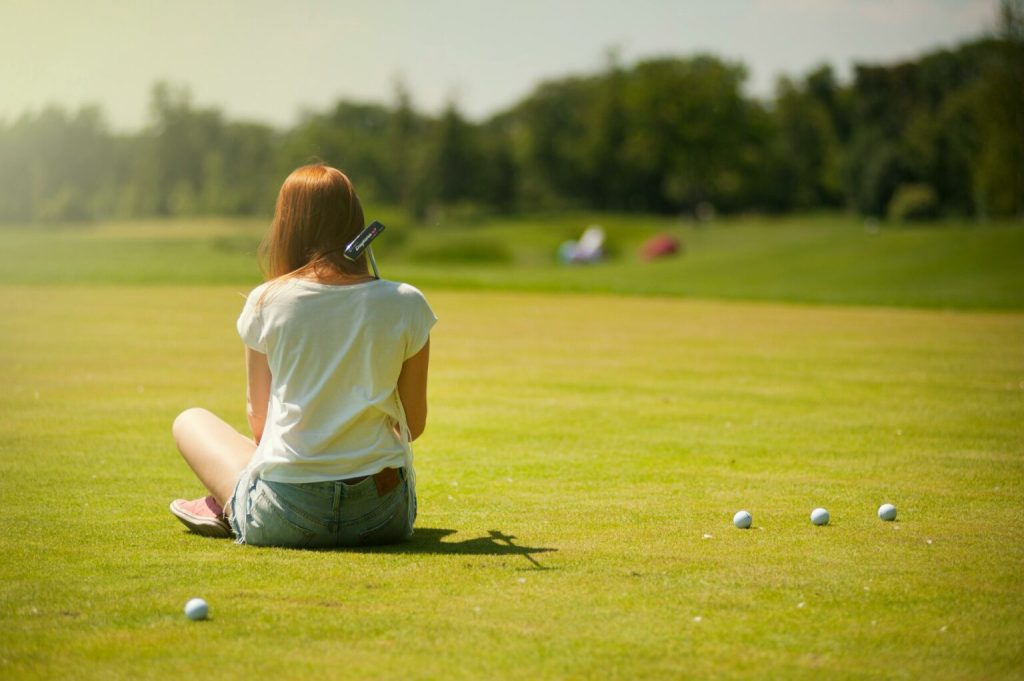
With regard to attracting visitors to play golf, the following is mentioned:
- An increase in golf facilities, either as stand-alone facilities or as part of specialised tourist infrastructure combined with hotel accommodation, or integrated into organised tourist activity facilities or into complex tourist accommodation.
- Upgrading of existing golf courses and the creation of networks of courses with the aim of establishing “golf tourist destinations” in all areas except the Control Areas.
- The location of golf facilities must be consistent with the Management Plan for the relevant water district, as set out in the relevant documentation within the context of the relevant environmental study.
CYCLING TOURISM
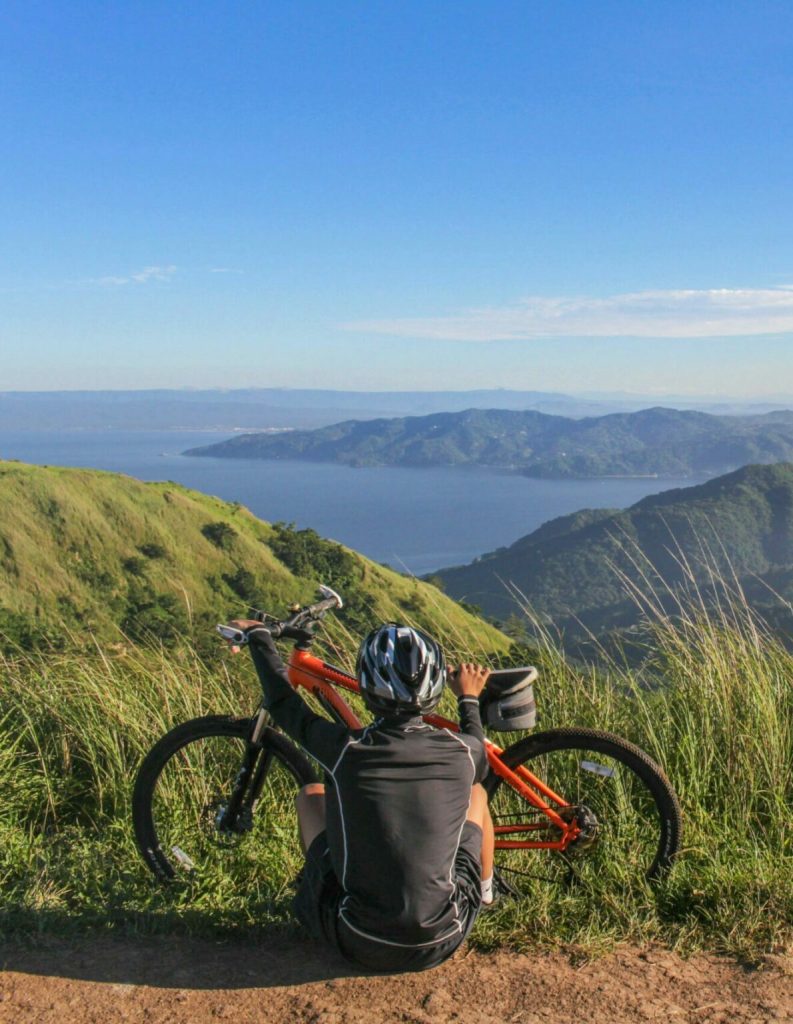
The following are mentioned in relation to cycle tourism:
- Development of cycle networks in urban areas
- The creation of a network of cycle routes in the countryside, and their connection to the trans-European cycle network.
MARITIME TOURISM
Marine spatial planning frameworks must facilitate the establishment of marine tourism activities by providing a sufficient number of locations where such activities are permitted.
CRUISE TOURISM
In this context, the following are mentioned in relation to cruise tourism:
- The improvement and modernisation of existing cruise passenger entry gates (home ports) and the creation of new ones, equipped with modern facilities, as a priority in developed and developing areas and in urban centres served by international airports.
- The creation of cruise passenger service facilities (ports of call) in ports that already have the capacity, or can acquire the capacity, to accommodate large cruise ships and are situated in areas of tourist interest.
- Provision for the division of the port area into a cruise service zone and a commercial/passenger coastal port zone; the designation of land uses within the port area to support cruise tourism, with the corresponding port and onshore facilities; and the facilitation of development on the outskirts of cruise terminals, including areas for commercial use, entertainment and the promotion of local products.
- Development of Tourist Destination Management Plans, which will cover the wider areas surrounding cruise ports, as well as the management of cruise passengers (with the aim, on the one hand, of providing them with the best possible service and, on the other hand, of protecting the destination from the simultaneous arrival of cruise ships that exceed the capacity of the available infrastructure). In areas affected by overtourism, these plans should set quantitative limits on the number of cruise ships present at any one time.
YACHTING TOURISM
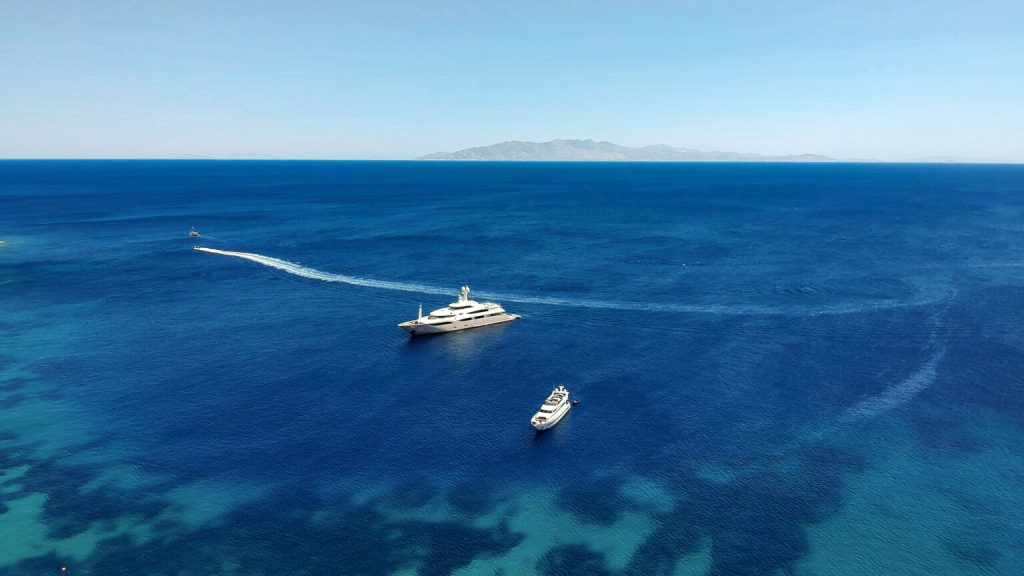
With a view to developing yachting tourism, the expansion of the network of tourist ports (marinas, anchorages, shelters) is mentioned, taking into account:
- The locations of the tourist ports that have already been designated. Particular emphasis is placed on expanding the network in the Ionian Sea, the eastern and south-eastern Aegean, and in gulfs such as the Argosaronic, the Argolic and the Pagasitic.
- Ensuring conditions for the satisfactory servicing and refuelling of tourist vessels through the rational distribution of tourist port infrastructure, with the aim of forming a network at indicative minimum sailing distances of 30 nm between marinas and 15 nm between marinas and shelters or anchorages. Further densification of the network is considered on a case-by-case basis, taking into account the demand for services and infrastructure for mooring tourist vessels, or the presence of specific local tourist attractions with high visitor numbers. The above indicative distances do not apply to urban areas and popular tourist destinations, where the demand for berthing places is given particular consideration.
- The demand for berthing places, as it changes over time.
- The geomorphological and environmental characteristics, wind and wave conditions, land uses and any existing special protection schemes for the proposed sites, which are also taken into account when selecting the type and scale of the tourist port.
RECREATIONAL DIVING TOURISM
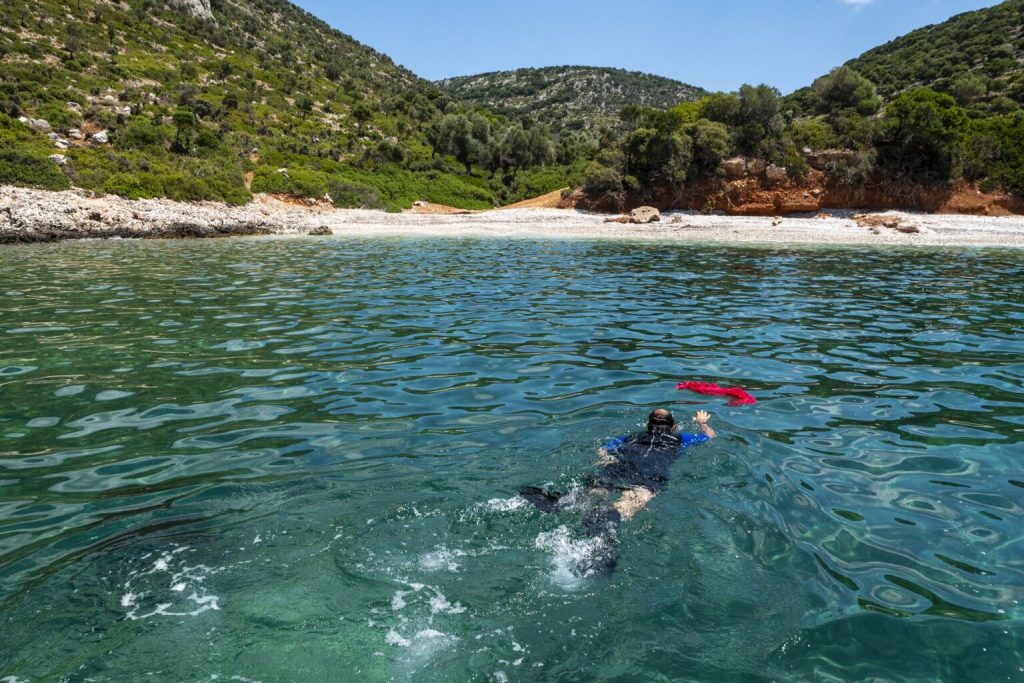
Diving tourism is developing in diving parks, at artificial underwater attractions, at newer shipwrecks and at underwater archaeological sites designated as “open to visitors”. The creation of a network of diving parks is encouraged.
CULTURAL TOURISM
With regard to cultural tourism, the following is mentioned:
- Upgrading and promoting the country’s museums, monuments, archaeological sites and folklore heritage, with priority given to Developing Areas, Areas with Development Potential and Undeveloped Areas within this framework.
- Promoting comprehensive regeneration in conjunction with Tourism Destination Management Plans (TDM) for the historic centres of cities, with a focus on the Control Areas and Developed Areas within this framework. Measures to integrate archaeological sites, where appropriate, must be included in this planning.
- Promoting comprehensive regeneration in conjunction with TDM in the areas surrounding archaeological sites and museums that attract large numbers of visitors.
- The creation of cultural routes at the level of spatial planning (regional unit and above), which will link together clusters of archaeological sites and monuments, as well as important individual sites and monuments. These routes should also incorporate significant cultural elements and individual natural monuments.
- Promotion of the development of large and internationally renowned archaeological excavation sites for tourism.
- Facilitating, through land-use regulations, the establishment of complementary activities (shops, restaurants, etc.) in the immediate vicinity of archaeological sites and museums that attract large numbers of visitors.
- Promotion of film, television and entertainment tourism.
- Operation and maintenance of open-air theatres to promote the country internationally in the field of cultural and entertainment tourism.
CITY TOURISM (city breaks – city trips)
With regard to urban tourism, the following points are noted:
- Supporting the role of cities as independent short- or long-term tourist destinations (city breaks – city trips) by enhancing their distinctive features, which boost their appeal to visitors and strengthen their identity (brand),
- The possibility of converting traditional buildings into tourist accommodation in areas designated for residential use only and general residential areas, without a maximum bed limit.
- In the event of the withdrawal of legally existing obsolete tourist accommodation units, provision should be made for the transfer of the building coefficient and for the possibility of rebuilding on the same site using the building coefficient that was in force when the unit was granted a licence.
- The possibility of reusing existing buildings in areas covered by the plan for any purpose by converting them into tourist accommodation and ancillary facilities, provided that these are included amongst the uses permitted in the area.
- Implementation of Tourist Destination Management Plans (TDMs) in areas within the plan that have a high density of tourist accommodation and/or infrastructure and complementary activities, as well as in adjacent informal tourist clusters.
RELIGIOUS AND PILGRIMAGE TOURISM
With regard to religious and pilgrimage tourism, the following is noted:
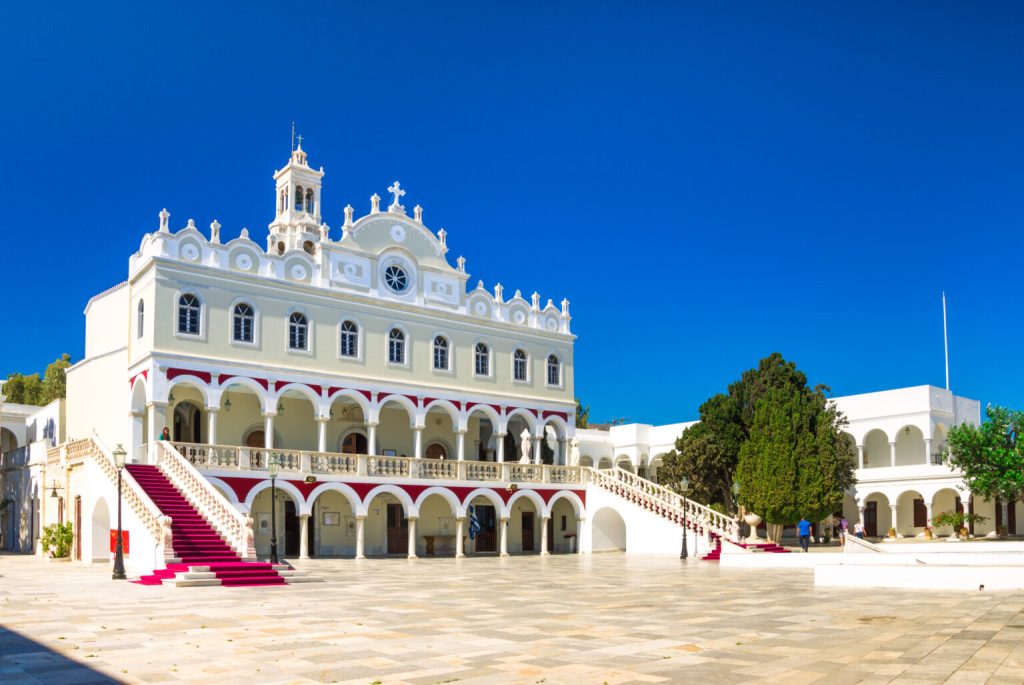
- Development and implementation of tourism destination management plans in the areas surrounding sites, spaces and monuments, buildings, monasteries and temples linked to the history and development of religious activity or of general religious significance. In these areas, town planning should facilitate the creation of complementary infrastructure, such as, for example, facilities for religious events and ceremonies, cultural activities and conference centres.
- Mount Athos is of particular importance in the context of religious tourism. Within the framework of self-government, spatial planning should facilitate the development of all activities that directly or indirectly support the religious role and sustainable development of Mount Athos.
- Preservation of the architectural characteristics of the monasteries from new building extensions that are not in keeping with their character.
CONFERENCE TOURISM
With regard to conference tourism, the following points are highlighted:
- The development of conference and exhibition tourism in the wider areas surrounding urban centres and, preferably, in the country’s established and emerging tourist destinations. Given the critical importance of having certain very large conference centres capable of hosting international events, the possibility of increasing basic town planning parameters (floor area ratio, volume ratio) subject to the approval of the competent authority.
- The creation of smaller-scale conference and exhibition tourism facilities in smaller towns and other tourist destinations.
- Utilisation of existing building stock, through the conversion of large-scale indoor sports facilities (e.g. Olympic venues) into conference and exhibition venues, and the restoration and reuse of valuable old building shells as conference and exhibition venues, with the introduction of incentives. The possibility of increasing basic town planning parameters (floor area ratio, volume ratio) subject to approval by the competent authority.
MEDICAL TOURISM
Reference is made to the role of urban planning in facilitating the creation of integrated medical tourism centres, which will include medical infrastructure, facilities for accommodating patients and their companions, and complementary activities and infrastructure. These centres may be established in General Residence zones, subject to compliance with the limits laid down therein for tourist accommodation, and in Tourism-Recreation zones.
HEAT-THERMAL TOURISM
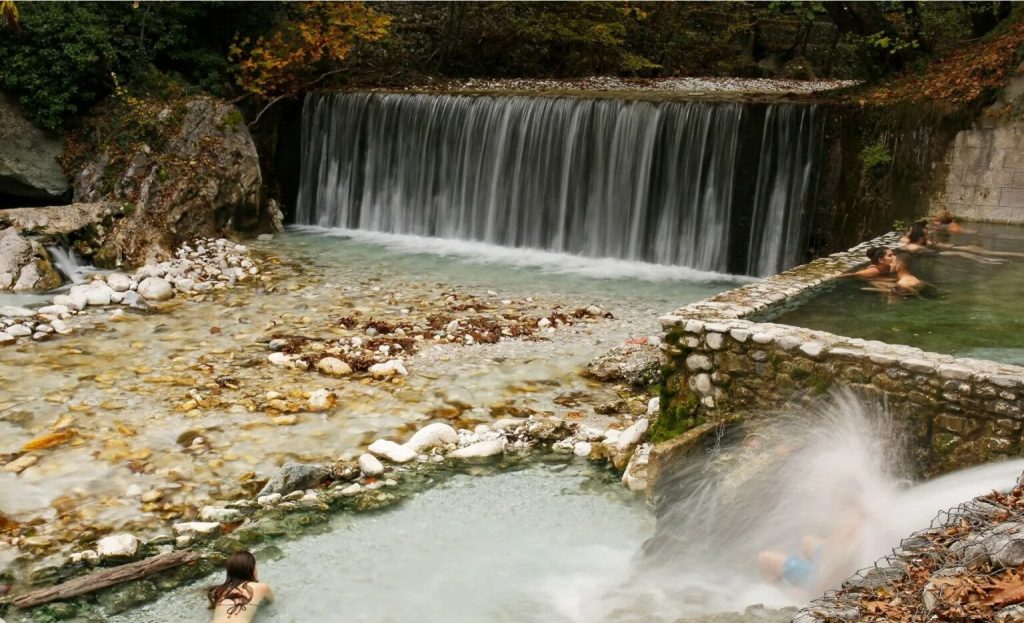
Spa tourism centres are permitted in areas that have recognised natural spa resources and are listed in the Ministry of Tourism’s Register of Recognised Natural Spa Resources. It should be noted that consideration is being given to the establishment of protection zones for spa natural resources and the implementation of protection measures for each zone, such as restrictions on land use within the boundaries of each protection zone, with the possibility of defining these through Local and Special Spatial Plans.
WELLNESS TOURISM
The Marine Spatial Frameworks must facilitate the installation of thalassotherapy infrastructure, providing a sufficient number of sites where such facilities are permitted. It is also noted that town planning facilitates the creation of spas and thalassotherapy centres, either on their own or in combination with 4- and 5-star hotel accommodation, as well as the possibility of using sections of beach and shoreline to support thalassotherapy centres.
OTHER SPECIAL AND ALTERNATIVE FORMS OF TOURISM
The promotion of entertainment and theme parks is mentioned, either on their own or in conjunction with urban tourism, which may include theme parks, adventure parks, miniature parks, etc. These parks may be combined with other activities such as multiplex cinemas, shopping centres, restaurants and amusement parks, particularly in major urban areas.
In addition to the above special and alternative forms of tourism, other such forms are also promoted, which enrich a region’s tourism offering. These forms may be linked to local tourist resources and the economic activities of each region (industry, energy, fishing, hunting, etc.). The use of disused quarries (beyond landscape restoration) for tourist activities, such as theme parks or other forms of tourism, is envisaged.
SPORADIC HOTEL
It is proposed to introduce the concept of a “sporadic hotel” into Greek tourism legislation, building on the provision allowing for the creation of Complex Tourist Accommodations within settlements abandoned prior to 1923 or with fewer than 2,000 inhabitants, in conjunction with the regeneration of part or all of the settlement. This requires legislative regulation and the issuance of the envisaged presidential decree, which will set out the specific selection criteria for the relevant settlements, the methods and means of town planning intervention, the methods for acquiring the necessary properties, the town planning and/or financial incentives provided, the bodies responsible for implementing the relevant programmes, etc.
Source: travel.gr